


Periodising "exhaustive" training for endurance sport: how hard is too hard?
- Tomas Black
- Oct 11, 2024
- 5 min read

A brand new study (published on the 9th of October) in cyclists by Odden et al. (2024) looked at the potential link between training intensity (during “high intensity training”) and performance gains. In a study of fairly high-level cyclists (with an average vo2max of 67ml/kg/min), they found that both time spent above 90% of vo2max and the higher % of vo2max reached during high-intensity training sessions correlated with performance related improvements (an increased aerobic capacity/vo2max, maximal power output during a vo2max test and power output at 4mmol/L of lactate) after nine weeks.
The findings are pretty clear, the more intense one trains, the larger training improvements one will likely yield (for this specific group of cyclists, at least. It would be interesting to know how the performance improvements change in athletes of varying ability. My prediction is that those with a smaller aerobic capacity would make larger performance improvements than those with a bigger aerobic capacity). Albeit an interesting (and extremely useful) study, an athlete must still be very careful regarding "going to the well" during high-intensity training. A strong belief of mine is that there's large parts of the macrocycle in which this type of training (termed "exhaustive training" in this article) has the potential to be more harmful than beneficial, which I'll aim to explain below.

Before discussing the application of exhaustive training in an athlete's macrocycle, it'll be useful to theorise the potential physiological changes at the heart of the performance improvement found in the above study. Firstly, the study mentions that there was no correlation between intensity of intervals and changes in haemoglobin mass, meaning the body's ability to transport oxygen to the muscle likely didn't improve, ruling this specific adaptation out as one of the main causes for the improvement in aerobic capacity. The study doesn't contain a large discussion on the potential mechanisms behind the aerobic capacity improvement, but my prediction is that it's related to improved mitochondrial respiration. There's a fair amount of research linking exercise intensity with improvements with mitochondrial respiration, meaning the mechanism behind the improvement in aerobic capacity is likely to be related to an improvement in the body's ability to convert fats or carbohydrates into adenosine triphosphate, rather than an improved ability to transport oxygen to the muscles.
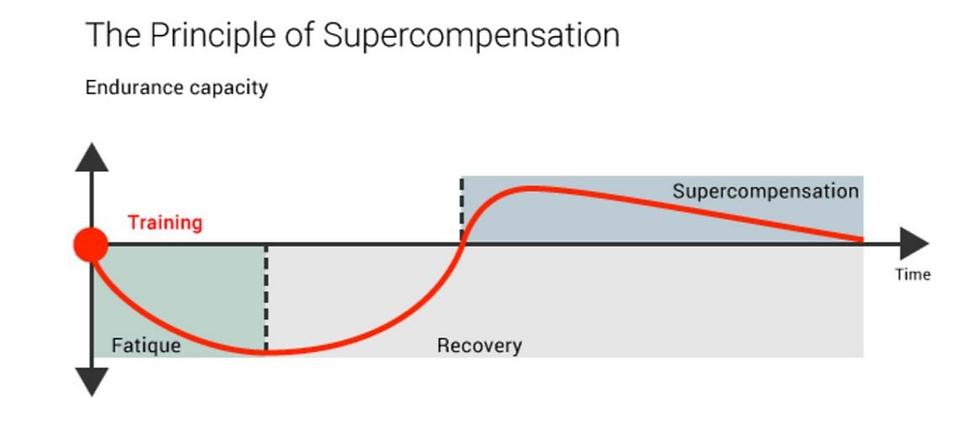
In endurance sport, the goal isn't to improve a singular aspect of our physiology, but to improve as many sport-specific aspects as possible, and the best way of doing this is through dedicating specific training cycles to certain aspects that want to be improved. In the non-competitive season, it's common for endurance athletes to increase their mileage (which is usually facilitated through a decrease in intensity) - this method tends to trigger an increase in mitochondrial count (or the amount of mitochondria in a cell). In the study above, the "interval" workouts were completed at extremely high intensities, which is highly likely to demand a much longer recovery than completing a session at even a slightly lower intensity. A classic study by Burnley, Vanhatalo and Jones (2012) found work conducted around the critical torque (the maximal effort that can be sustained for a long time) produced fatigue (central and peripheral) four to five times greater than the fatigue produced by working just 10% under the critical torque. Simply, despite a fairly small increase in intensity, once the athletes crossed the maximal effort level that they were able to sustain for a long period of time, rates of fatigue drastically increased. In Odden's new study, the "key" workouts are all likely performed above the "critical" effort, meaning recovery from those workouts is going to be lengthy in comparison to slightly less intense workouts.
As mentioned above, in certain (non-competition) phases of a macrocycle an athlete will want to increase their mileage. I don't believe that combining an increased mileage with exhaustive workouts is safe. During training periods in which mileage is high, it's common for athletes to train twice (or even three times) a day. This - combined with the suppressed immune function following exhaustive exercise - may increase the risk of illness or overtraining. Illness, injury or overtraining syndrome will force an athlete to (at best) decrease their mileage or (at worst) stop training altogether, forcing the athlete to lose performance enhancing adaptations, rather than gain adaptations. The reason why training below the maximal metabolic steady state (or the lactate threshold) is so popular amongst elite athletes is due to the decreased amount of fatigue it generates compared to higher intensity training. There doesn't seem to be a special stimulus as a result of training at the lactate threshold, it simply allows for more high-intensity work to be completed as recovery periods are short in comparison to work conducted above the lactate threshold. It's common for elite endurance athletes to perform five sessions a week at the lactate threshold (Haugen and Tonnessen, 2024). This volume of high-intensity training would simply not be possible if it produced high levels of fatigue, which is why athletes tend to cap their intensity at or below the lactate threshold, due to the decreased generated fatigue and thus decreased recovery times (it's important to note that training at or slightly below the lactate threshold likely allows for similar adaptations to those seen in the above study, but those adaptations would likely not occur as dramatically as the training intensity is slightly less). During the phase of training in which one of the goals is to increase mileage, the coach (or athlete) will likely have to sacrifice large adaptations (through exhaustive training) for the sake of remaining healthy and consistent with training.
However, decreasing mileage may aid in accommodating more intense training, which is how the training utilised in the above study could be safely and effectively implemented into an athlete's training. The pre-competition period seems the most safe and effective point of the macrocycle in which an increased training intensity should occur. At this point of the training cycle, athlete's begin to maintain the general adaptations they developed throughout the non-competition period in order to get a larger boost of current performance (which, as the study shows, exhaustive training can provide very effectively). Additionally, exhaustive training (as utilised in the above study) seems to replicate the guidelines of "aerobic power training", first developed by Dr Jan Olbrecht. This type of training aims to maximise the current capacities of the athlete, and is said to bring both dramatic and rapid improvements in performance. The primary negative of this extremely intensive/race specific training is that it's very unlikely to be sustainable, and will likely be harmful to performance long-term (likely as a result of the decreased training volume due to the extremely lengthy recovery periods this training demands). This type of training is discussed in great detail by Olbrecht in his book "The Science of Winning" but also discussed by Scott Johnston in "Training for the Uphill Athlete", who defined this training style as "utilisation training".
In summary, exhaustive training does have its place, but the coach must be very careful in how they execute training based on the type of adaptations they desire. If the desired adaptations are more related to the long-term capacities of the athlete, they should refrain from completing large amounts of exhaustive training as they generate too much fatigue (and thus too long of a recovery period) to allow for high volumes of training to be completed safely. Instead, training around the maximal metablic steady state/lactate threshold should be the focus, as this level of intensity likely generates much less fatigue than exhaustive training. However, in the training period in which mileage is decreased (for example, the pre-competition period), exhaustive training looks to be an extremely effective tool. An athlete must be wary of not completing exhaustive training for extremely long-periods (at the moment, beyond two mesocycles seems risky) as the decreased training volume to accommodate exhaustive training would likely mean the athlete would begin to lose some of their general capacities that were developed during the non-competition period.
Comments