


Iatrogenesis, Ego and Delayed Gratification in Endurance Sport
- Tomas Black
- Jan 20, 2025
- 7 min read

I'm currently reading Manuel Sora Arjona's "The Nature of Training", a fascinating book that takes philosophical ideas from non-sporting areas and applies them to endurance sport. In the book, Arjona introduces the term "iatrogenesis", described as the act of making something worse by trying to make something better. This term is closely linked to the medical field (in this case, iatrogenesis is defined as injury/illness that occurs as a result of medical care), but the concept of iatrogenesis applies to all walks of life, especially endurance sport. It's a shame that this term seems to only apply to medicine, but as Arjona mentions, the medical field should be praised for recognising that good intentions can sometimes lead to bad results. This got me thinking about cases of iatrogenesis that often occur in endurance sport, whether a result of the coach or athlete, which this article will aim to explore.
Before directly applying this concept to endurance sport, I feel it's necessary to discuss why iatrogenesis - or the concepts behind it - are so uncommon outside of the medical field. I believe our egos tend to get in the way of rational thinking. We naturally don't like being proven wrong which can often lead to stubbornness, however, those in the medical field can't afford to be stubborn due to the catastrophic effects it may have on a patients life, which is why they recognise when good intentions may not be the optimal solution. However, stubbornness and persevering with ideas is commonly seen in sport (especially football), where managers are encouraged to stick to their tactical principles even through periods of failure. This is something I agree with to an extent as constantly adapting tactical ideas would likely lead to confusion among athletes, but the line must be drawn somewhere, and the issue with current coaching ideas in the United Kingdom is that the line (of adapting training/playing styles) is never drawn. Tottenham Hotspur manager Ange Postecoglou (or former Southampton manager Russell Martin) are good examples of ego-caused iatrogenesis. Despite Southampton making 17 errors leading to opposition goals this season (7 more than the next team, Ipswich), they continued to persist with their style of play that was clearly costing them results. Although Martin's intentions were likely good (although in hindsight it could be argued that his intentions were more benefitory to his own career rather than the success of the team, but that's a topic I'd like to discuss at another time), they've ended up being catastrophic for Southampton's season, leaving them with a win rate of 4.5% and relegation a borderline certainty. There are clear differences between team sports and individual sports (most endurance sports), but the above example is the best I could think of at the elite level. With the above in mind, some potential cases of iatrogenesis in endurance sport coaching can be explored.
Trend-Driven Methodology
As with anything, endurance sport training theory goes through trends. Due to the ultra-success of Jakob Ingebrigtsen, double-threshold training (training at the maximum metabolic steady state twice in a day) has grown as an extremely popular training method for athletes of numerous ability levels. In isolation, it's hard to deny this training method (like most training methods) is effective, but by following training method trends the athlete may not be prioritising their individual needs. For example, if the athlete lacks a "kick" at the end of races (in other terms, a lack of anaerobic capacity), then double-threshold training is unlikely to give the desired effect. Alternatively, if an athlete is able to sustain a very high percentage of their VO2Max, they may find a bigger performance improvement by prioritising the improvement of their VO2max (which likely requires training above the maximal metabolic steady state).
Following a training methodology trend may make the coach/athlete be perceived as smarter or more "scientific", feeding into the ego, but there may be cases where that training trend is not optimal for performance. These "trends" apply to the vast majority of sports. In football, Pep Guardiola introduced inverted full-backs (where full-backs, traditionally wide players, entered the centre of the pitch in possession). Within a season, dozens of teams across Europe were employing the same tactic, despite some of those teams having players with strengths/weaknesses that don't align with that player moving into the centre of the field. In all cases, a coach must be honest with themselves and prioritise what they believe to be most effective ahead of what's currently most popular. If not, the coach risks harming long-term performance for the sake of an ego stroke.
Excessive Training and Insufficient Recovery
In endurance sport training, it's easy to fall into the trap that more training translates to bigger gains. However, this attitude has the potential to be extremely harmful. The theory of supercompensation shows that training simply makes the athlete fatigued, and that the performance improving adaptations are made during recovery. Therefore, every athlete has a "ceiling" in which a volume of training will begin to be detrimental to performance (by placing an athlete into a deeper state of fatigue day after day), rather than beneficial.
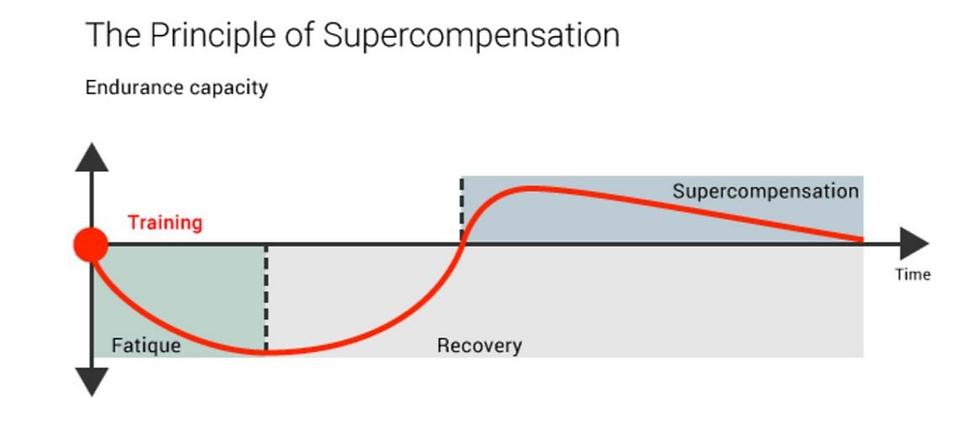
It's easy for a coach to assume that by increasing training volume that an athlete will see bigger improvements. In a world where time doesn't exist, this would be true, but training time eats into recovery time. Instead of striving for the most training volume a athlete can handle, the goal should be to discover the least amount of work an athlete can do to achieve their goal (this is a quote commonly used by Scott Johnston, one of the best ultra-running coaches in the world). By adopting this view, the athlete's risk of illness/injury or burnout is decreased, allowing for more consistent training over the long-term.
This might be the most common case of iatrogenesis in endurance training. A coach believes they're benefiting the athlete by increasing their training volume, but in certain cases this training decision may end up damaging the athlete.
Nutrition and Weight
Luckily, this viewpoint seems to becoming outdated, but it's likely that many coaches still hold the belief that lighter equals faster (especially in endurance sports with a lot of climbing like vertical kilometre running or certain stages of the Tour de France due to less effort being needed to overcome gravity). Although this is true, it seems the longer-term effects of this belief are often missed. Being heavier during a vertical kilometre will require more effort to propel against gravity which may be damaging to performance (if other aspects are not covered to make up for the increased weight), but not being at the start line due to illness/injury (with insufficient caloric intake as a primary factor) is more damaging than all else.
In addition, both physical training and training adaptations require energy (derived from calories). An athlete with an excessive focus on weight - resulting in a reduced caloric intake - may impact the adaptations made from training which means an athlete is unlikely to fulfill their potential based on the training they've completed. There's one benefit to reducing weight, but there are many more potential drawbacks. In an attempt to improve performance by reducing weight, the athlete risks not optimally adapting to training or having an increased risk of illness or injury (due to decreased immune function or decreased bone density, both of which are potential effects of low caloric availability).
Attempting to Peak Too Often
Endurance sport as a whole is a game of delayed gratification. An elite sprinter may spend more than four years preparing for the next Olympics, where they'll compete for approximately ten seconds. Alternatively, an elite marathoner will run thousands of miles within a training cycle with the goal of executing just 26 on race day. Endurance athletes naturally practise delayed gratification, but can also occasionally lose sight of the long-term goal for the sake of an "easy win", and I think excessive rest prior to non-priority competitions is an example of endurance athletes giving into this "easy win". A long-distance athlete could easily lose 20-30 hours of training time throughout a training block by resting prior to every race. There's a place for a "taper" or extra rest, but this place is most suitable prior to very important events (or A-races, as is often described). Athletes will find benefit in swallowing their pride/ego and competing in races knowing they aren't at their full capability (due to training fatigue), but with the long-term vision that the current sacrifices will pay off when the "A-race" arrives. On the other hand, it's easy to rest prior to every race and have a good performance, but I don't believe the athlete is doing themselves any favours long-term by adopting this mindset.
"Hyping Up" the Athlete
This is a slightly more obscure topic, but feels worth mentioning. There's a common consensus that "hyping up" an athlete prior to competition increases motivation and thus performance, but arousal levels are completely individual and "hyping up" an athlete who performs optimally at lower levels of arousal has the potential to decrease performance, rather than enhance it.
Hanin's individual zones of optimal functioning (IZOF) model suggests that athletes have a level of arousal in which they perform optimally. If arousal is too low or too high relative to their optimal zone, then performance will not be at its best. As shown in the image below, not all performance enhancing emotions have to be positive, and coaches should embrace those negative emotions if they feel the athlete will perform greater as a result of experiencing those emotions. The crucial point is that if every athlete was to do a measure of their optimal arousal zone, not every graph would look the same. The graph below shows that an "easygoing" attitude is detrimental to the specific athletes performance. However, this specific feeling could be a helpful emotion for an athlete with the suitable personality traits (perhaps more introverted, for example).

The overarching message is that coaches must not assume that every athlete needs (or wants) to be "hyped up" or motivated to produce their best performance. In the case of endurance sport, "hyping up" the wrong athlete could force that athlete to adopt an ultra-aggressive pacing strategy, risking a catastrophic "blow up" in the latter stages of the event. It's important that the coach recognises/understands each athlete and an individual to allow them to act in a suitable manner prior to performance.

Comments